5 Simple Steps to Secure Your Financial Stability Early in Your Career
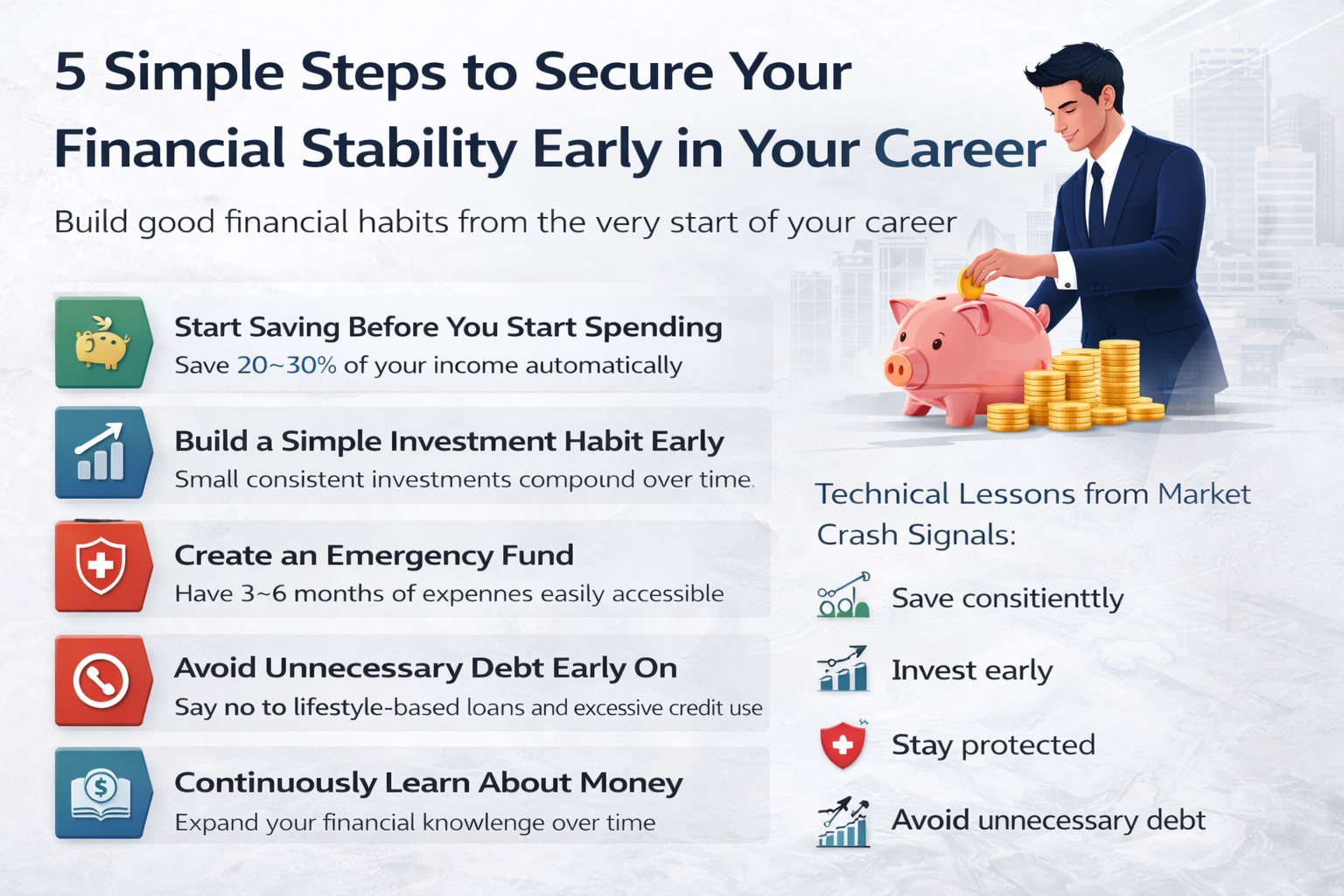
Starting your career is an exciting phase — your first income, independence, and the ability to make your own financial decisions. But it is also the most critical time to build long-term financial stability.
The truth is simple:
The earlier you start managing your money wisely, the easier your financial journey becomes.
You don’t need complex strategies or large capital in the beginning. What you need is clarity, discipline, and the right approach.
Here are 5 widely recommended and practical steps to help you secure your financial future from the very start.
1. Start Saving Before You Start Spending
One of the most common mistakes early in a career is spending first and saving whatever is left — which is often nothing.
Instead, follow this principle:
Pay yourself first
-
Save at least 20–30% of your income
-
Automate your savings if possible
-
Treat savings as a non-negotiable expense
Why it matters:
-
Builds financial discipline
-
Creates a safety cushion
-
Forms the foundation for investing
2. Build a Simple Investment Habit Early
Saving alone is not enough — your money needs to grow.
Even small investments made early can create a strong impact over time due to compounding.
Start with:
-
Systematic investments (monthly contributions)
-
Simple, well-understood instruments
-
Long-term perspective
Example insight:
-
Investing consistently over 10–15 years often leads to exponential growth compared to late investing
The goal is not timing the market — it’s time in the market.
3. Create an Emergency Fund
Financial stability is not just about growth — it’s also about protection.
An emergency fund ensures that unexpected events don’t disrupt your financial plan.
Target:
-
3 to 6 months of living expenses
Keep it:
-
Easily accessible
-
Separate from your main account
Why it matters:
-
Protects you from debt
-
Provides peace of mind
-
Allows you to stay invested during tough times
4. Avoid Unnecessary Debt Early On
Debt can either support growth or create long-term financial stress.
Early in your career:
-
Avoid lifestyle-based debt (unnecessary loans, credit overspending)
-
Use credit responsibly
Important observation:
-
High-interest debt can significantly reduce your ability to save and invest
Focus on:
-
Needs over wants
-
Financial discipline over instant gratification
5. Continuously Learn About Money and Markets
Your income may grow over time — but your financial decisions determine your wealth.
Make learning a habit:
-
Understand basic investing
-
Learn about markets and assets
-
Stay aware of financial trends
You don’t need to become an expert overnight — but consistency matters.
Over time, knowledge helps you:
-
Make better decisions
-
Avoid common mistakes
-
Build confidence
Putting It All Together
If you combine these 5 steps, you create a strong financial base:
-
Save consistently
-
Invest early
-
Stay protected
-
Avoid unnecessary debt
-
Keep learning
This approach may seem simple — but it is extremely powerful when followed consistently.
Final Thoughts
Financial stability is not built overnight.
It is built through:
-
Small, consistent actions
-
Disciplined habits
-
Long-term thinking
Starting early gives you one major advantage:
Time
And in finance, time is one of the most powerful assets you have.
You don’t need perfect decisions — you need right direction and consistency.
This content is for educational purposes only and does not constitute financial advice.












Post Comment