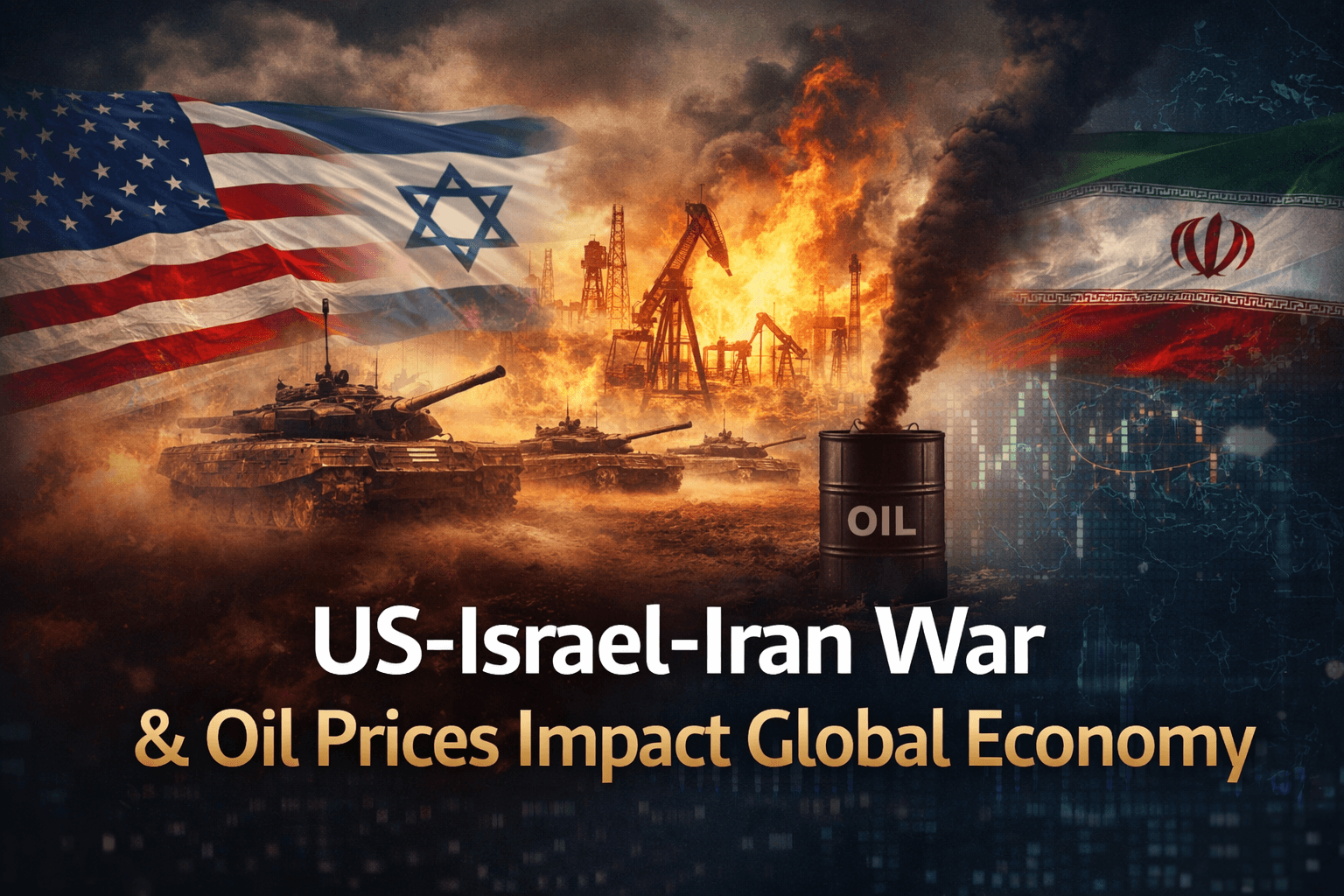
In global markets, geopolitics can change economic direction faster than policy meetings or earnings reports. The ongoing US-Israel-Iran War has become one of the most closely watched risks for investors because it directly intersects with energy markets, shipping routes, inflation, and investor sentiment.
At the center of the crisis lies a familiar but critical variable: oil prices.
When military tensions rise in the Middle East, markets immediately assess whether supply disruptions could follow. That reaction is rational. A meaningful share of the world’s oil and liquefied natural gas flows through the Strait of Hormuz, making regional instability a global economic issue rather than a local conflict.
For investors in India, the United States, Canada, and beyond, understanding how the US-Israel-Iran War affects oil prices and the broader economy is essential for navigating volatility with discipline.
Why the US-Israel-Iran War Matters to Financial Markets
The Middle East remains one of the world’s most important energy-producing regions. Any escalation involving the United States, Israel, and Iran can quickly influence:
- Crude oil prices
- Shipping insurance costs
- Global inflation expectations
- Airline and logistics expenses
- Equity market risk appetite
- Currency flows into safe havens
Recent market reactions have been sharp. Brent crude prices moved significantly as traders responded to disruption fears and then diplomatic headlines. Reuters reported Brent settled near $90 after falling more than 9% when hopes emerged that Hormuz traffic might normalize.
That price swing highlights a modern reality:
The Strait of Hormuz: Why One Waterway Matters Globally
The Strait of Hormuz is one of the world’s most strategic energy chokepoints. Roughly one-fifth of global oil flows through this narrow passage.
Recent reports indicate renewed uncertainty over access and security in the waterway, with attacks on vessels and threats to commercial traffic. Reuters and other major outlets reported that market participants remain sensitive to any closure risk.
If Hormuz Faces Prolonged Disruption, Markets Typically React Through:
- Higher crude oil prices
- Rising freight and insurance costs
- Supply chain delays
- Inflation pressure on importing nations
- Broader risk-off sentiment in equities
How Oil Prices Influence the Global Economy
Oil is not just an energy commodity. It is embedded in transport, manufacturing, fertilizers, aviation, and consumer goods pricing.
When oil rises sharply:
- Transport companies face margin pressure
- Airlines pass costs to travelers
- Food costs may rise through logistics and fertilizer inputs
- Central banks become more cautious on rate cuts
- Consumers reduce discretionary spending
This is why the US-Israel-Iran War matters even to households far from the conflict zone.
Impact on the United States
The United States has large domestic energy production, but it is not immune to global oil pricing.
Likely US Effects Include:
- Higher gasoline prices if crude rises materially
- Pressure on consumer sentiment
- Delayed Federal Reserve easing if inflation re-accelerates
- Volatility in energy, defense, and airline stocks
If oil remains elevated for months, markets may begin pricing slower growth alongside sticky inflation.
Impact on India
India is among the world’s major energy importers. That makes oil spikes especially relevant.
How India Feels the Pressure:
- Higher import bill
- Pressure on rupee stability
- Fuel-linked inflation risks
- Fiscal strain if subsidies rise
- Margin pressure on transport and chemicals sectors
For Indian investors, the US-Israel-Iran War is not a distant geopolitical story—it can affect domestic inflation, policy decisions, and market valuations.
Impact on Canada
Canada is a major energy producer, so higher oil can create mixed outcomes.
Potential Canadian Effects:
- Stronger earnings for energy companies
- Improved trade balance
- But higher consumer fuel costs
- Inflation concerns similar to other developed markets
This illustrates an important investing principle:
Which Sectors Could Benefit or Struggle
Potential Beneficiaries
1. Energy Producers
Higher crude prices can improve revenue and cash flow.
2. Defense Companies
Conflict often increases attention on defense budgets.
3. Commodity Exporters
Certain producers benefit from higher resource pricing.
Potentially Vulnerable Sectors
1. Airlines
Fuel costs are a major expense.
2. Logistics / Shipping
Insurance and rerouting costs can rise.
3. Consumer Discretionary
Households facing fuel inflation may cut optional spending.
4. Rate-Sensitive Growth Stocks
If inflation rises, expected rate cuts may be delayed.
Oil Prices and Inflation: The Bigger Macro Risk
Many investors focus only on headline war risk. The more durable issue may be inflation.
If crude remains elevated:
- CPI can rise globally
- Central banks may remain restrictive longer
- Bond yields may stay higher
- Equity valuations may compress
That creates a broader macro challenge beyond energy markets alone.
How Markets Typically Trade War Headlines
History shows markets often move in phases:
Phase 1: Shock Reaction
Oil rises, equities fall, gold strengthens.
Phase 2: Reality Check
Markets assess whether supply is actually disrupted.
Phase 3: Adaptation
If flows continue, panic premiums fade.
Phase 4: Structural Repricing
If disruption lasts, inflation and earnings estimates adjust.
Recent price swings in oil suggest markets are oscillating between Phase 2 and Phase 3.
Common Investor Mistakes During Geopolitical Crises
1. Reacting to Every Headline
Short-term headlines can reverse quickly.
2. Ignoring Sector Rotation
Some sectors benefit while indexes appear weak.
3. Assuming War Always Means Recession
Economic impact depends on duration, supply disruption, and policy response.
4. Forgetting Currency Moves
Dollar strength often accompanies risk aversion.
Strategic Insights for Smart Investors
The ongoing US-Israel-Iran War should be studied through data, not emotion.
What to Monitor Weekly
- Brent crude price trend
- Strait of Hormuz shipping status
- US inflation data
- Federal Reserve commentary
- Airline / transport earnings commentary
- Defense and energy stock relative strength
Portfolio Thinking
Rather than predicting headlines, investors often do better by asking:
- Which sectors gain if oil stays high?
- Which businesses can absorb input costs?
- Which countries are most exposed to imports?
Internal Linking Suggestions
Link this article internally to:
External Reference Suggestions
For broader macro context, readers can review:
Conclusion
The US-Israel-Iran War is more than a geopolitical flashpoint. It is a live macroeconomic variable with the power to influence oil prices, inflation, currencies, and investor sentiment across continents.
For India, higher import costs matter. For the United States, inflation and gasoline prices matter. For Canada, energy gains may offset consumer pressure. For markets globally, the key question is whether disruption remains temporary—or becomes structural.
In uncertain periods, disciplined investors focus less on noise and more on transmission mechanisms: oil, inflation, rates, and earnings.
That is where clarity begins.
Frequently Asked Questions
1. Why does the US-Israel-Iran War affect oil prices?
Because the region is central to global energy supply, especially through the Strait of Hormuz.
2. Which countries are most vulnerable to rising oil prices?
Large importers such as India and many Asian economies typically feel stronger pressure.
3. Can stock markets rise during conflict periods?
Yes. Markets often recover if disruption remains limited and earnings outlooks stay resilient.
Final Note
If you want structured financial insights, subscribe for regular updates.
Clear investing often comes from understanding how global events move real economic variables.
Disclaimer: This content is for educational purposes only and does not constitute investment advice.



















Post Comment